
 Image 1 of 5
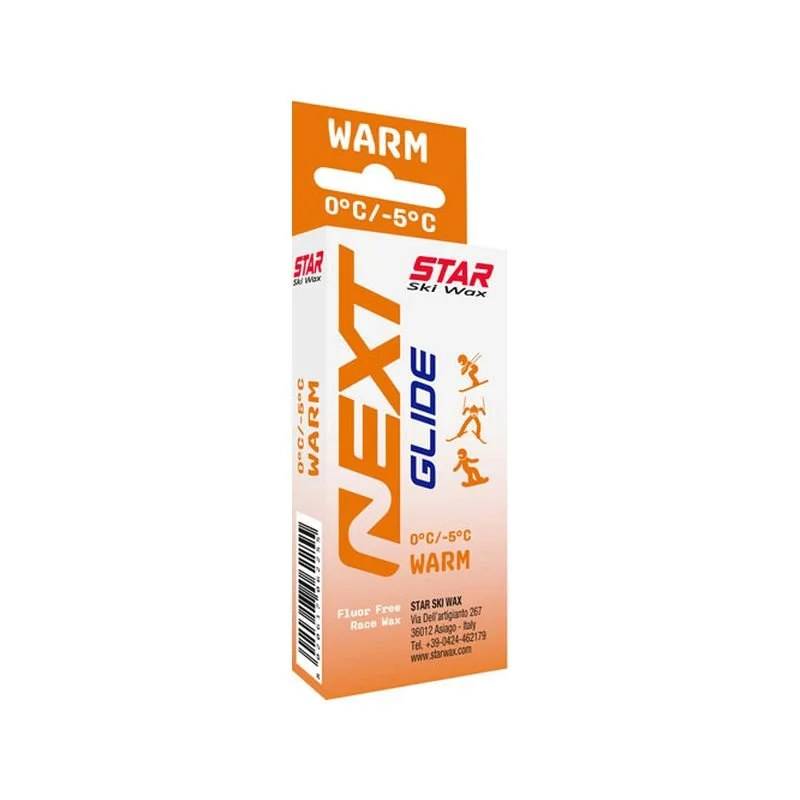 Image 2 of 5
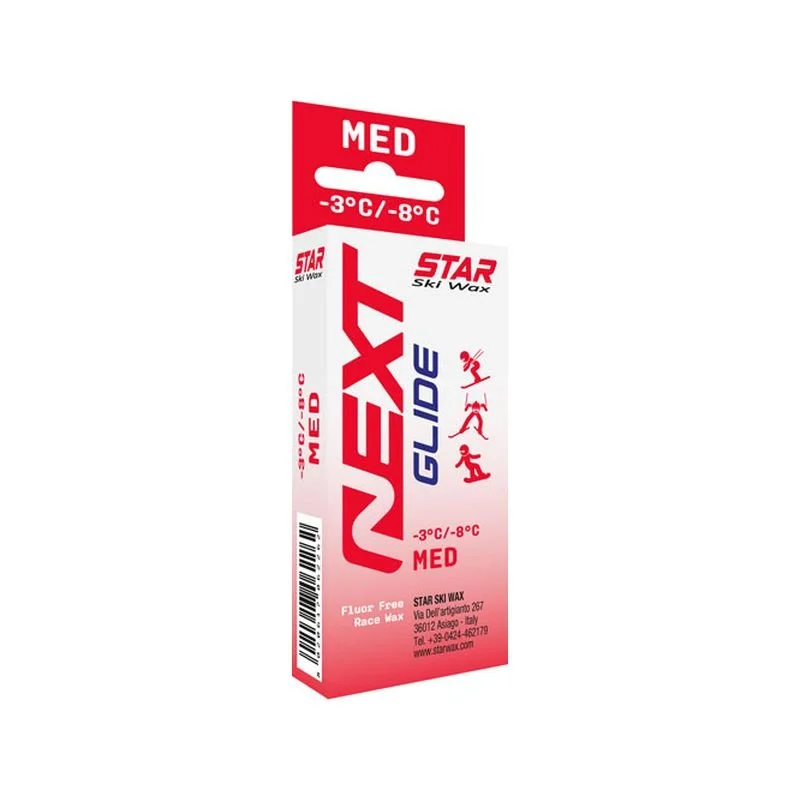 Image 3 of 5
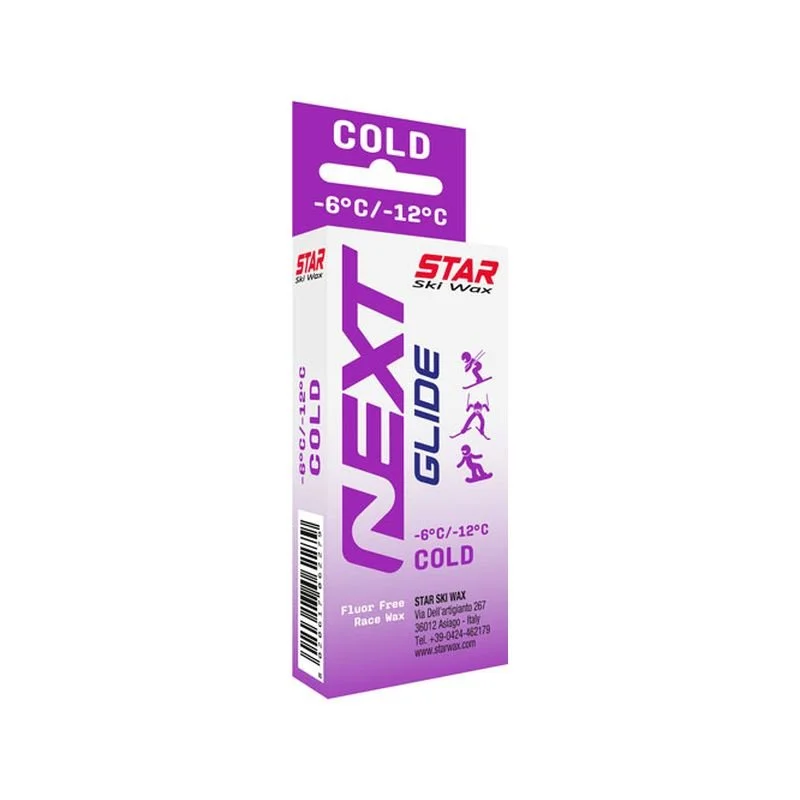 Image 4 of 5
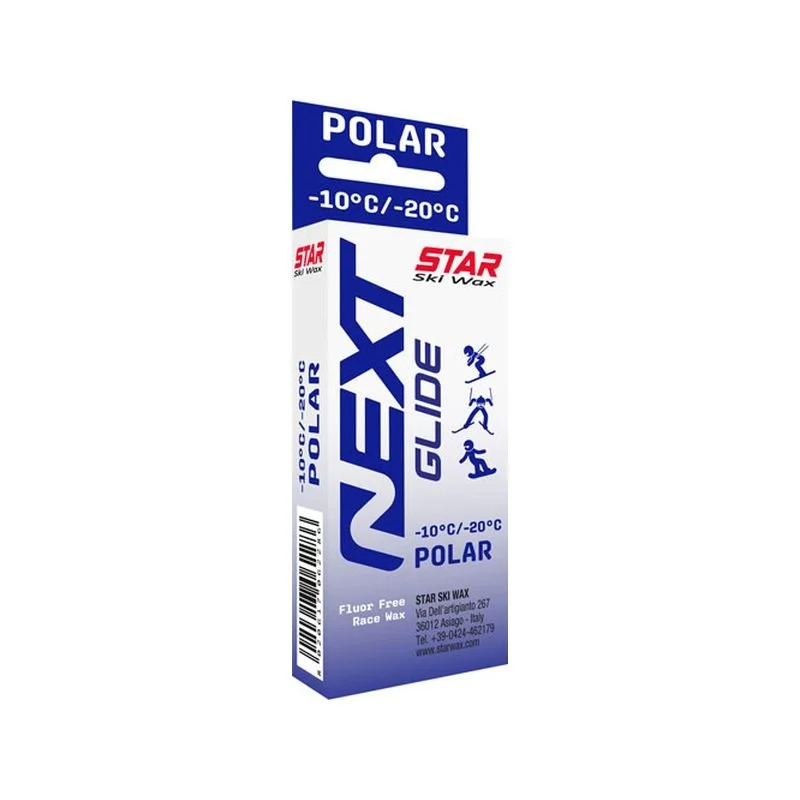 Image 5 of 5
The chase to develop race level glide waxes without fluorocarbon has led many to feel like they have to settle for fluoro prices, yet not getting equivalent performance.
And they would be correct.
The non-fluoro glide waxes frequently don’t deliver on the basis of cost=performance. There are many very affordable glide waxes that are only a wee bit less in performance compared to products costing much more.
Here’s one example. The Next solid melt-on gliders from Star are priced at or below the retail price of competitor’s most affordable (and lowest performance), but use the ceramic additive chemistry found in their renowned Next Powder line.
The concentration of the additives are lower, but in many conditions (especially new snow) the speed will impress.
Cheap. Fast.
They also tend to melt easily at temperatures often lower than the more expensive glide waxes.
For some skiers, these could be both everyday and race day waxes. For very competitive skiers, these provide excellent base layers to support top layers of elite level glide waxes.
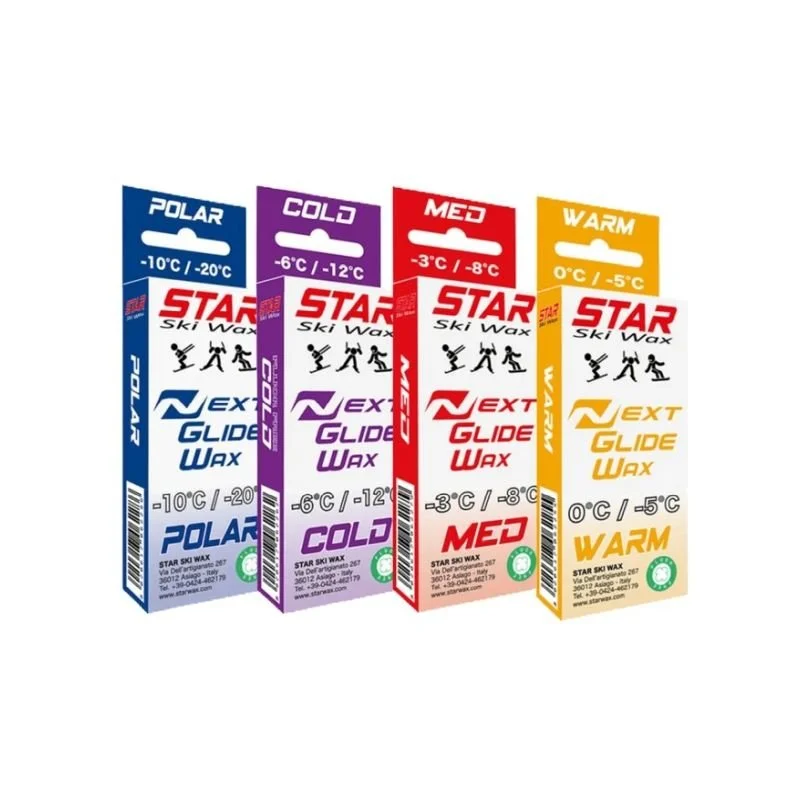
Warm. Snow temperature 0° / -5°C. Iron temperature 120°C.
Medium. Snow temperature -3° / -8°C. Iron temperature 130°C.
Cold. Snow temperature -6° / -12°C. Iron temperature 140°C.
Polar. Snow temperature -10° / -20°C. Iron temperature 150°C.